
HeatShield Chimney Inspection in Lexington: A Homeowner’s Guide
Most homeowners in Lexington assume a cracked flue means a stainless steel liner, and a stainless liner means thousands of dollars. That assumption is often wrong. HeatShield resurfacing exists specifically for chimneys that don’t need a full reline, yet most people never learn the difference until they’ve already paid for the bigger job. A HeatShield chimney inspection in Lexington answers one question: is your flue a candidate for resurfacing, or does it genuinely need a new liner? The two paths cost very different amounts, and the inspection is what separates them.
If you’d rather have a trained eye make that call than guess from the fireplace, call (833) 946-8918. We answer 24/7.
Key Takeaways
- HeatShield is a resurfacing system for a damaged clay liner, not a cleaner or a sealer.
- A HeatShield inspection looks at crack width, spalling depth, flue material and flue geometry to decide if your chimney qualifies.
- Not every flue is a candidate. Wide gaps, missing clay, offsets and severe deterioration usually rule it out.
- Application requires a trained, certified applicator. A general contractor with passing familiarity isn’t the same thing.
- You should walk away from any inspection with photos and written documentation, whether you book the work or not.
What is HeatShield, and what is it not?
HeatShield is a resurfacing system that rebuilds the inside face of a damaged masonry flue. It is not a sweep, not a coating sprayed over creosote, and not a substitute for a proper repair. The product most homeowners hear about is HeatShield Cerfractory Flue Sealant, a ceramic-cement formulation applied to the interior of the flue to bond to the existing clay liner and close the kind of damage that lets combustion gases escape into the structure of a Lexington home.
Here’s what it bonds to and what it doesn’t:
- What it bonds to: sound clay tile with hairline to moderate cracking, minor spalling at the surface, and joints that are intact enough to hold the material in place. It’s engineered for damage that’s real but not yet structural.
- What disqualifies a flue: missing or displaced tiles, wide gaps where the liner is essentially gone, deep spalling that leaves the tile face crumbling, flues with severe offsets, and masonry that’s already failing around the liner. If the substrate won’t hold, resurfacing won’t fix it.
Think of it this way: HeatShield restores a flue that’s damaged but still a flue. If the flue has stopped being one, you need a DuraFlex stainless liner instead. Both are professional-grade systems we work with, and both have a place. The inspection decides which.
What a HeatShield candidacy inspection actually evaluates
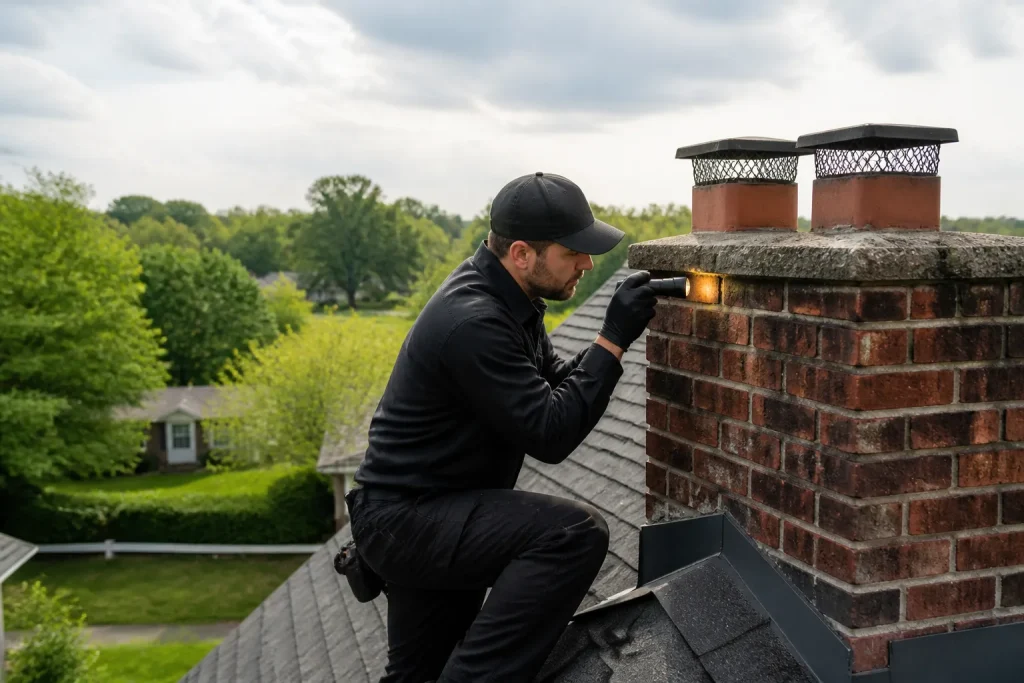
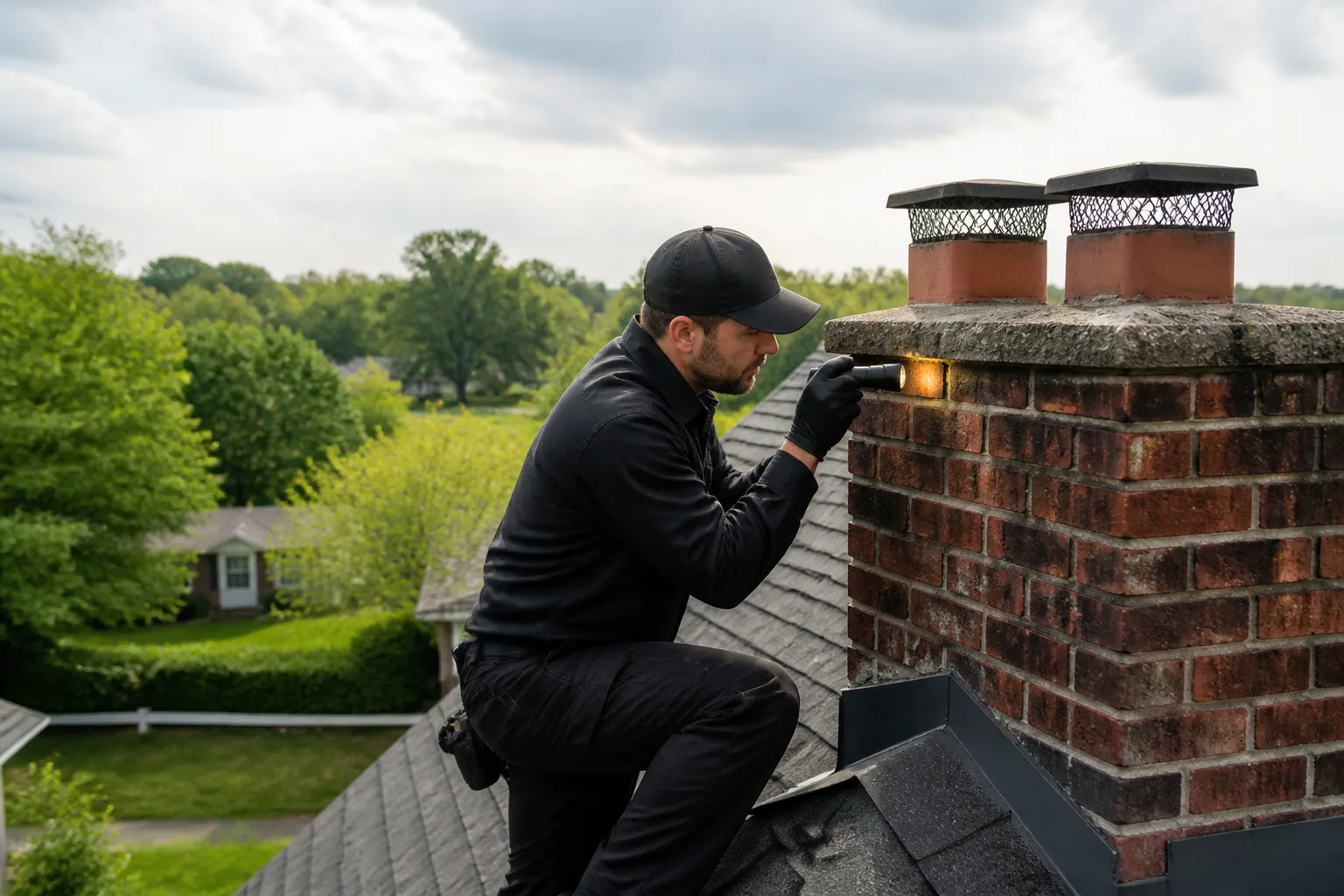
A HeatShield-focused inspection in Lexington is more specific than a standard safety check. It scans the flue with a camera, then measures what it finds against candidacy criteria. The technician is answering a yes-or-no question about whether your chimney qualifies, not just whether it’s safe.
Here’s what’s on the list:
- Flue material assessment. Clay tile versus a previously lined flue versus bare masonry. Existing liners are common in Lexington homes, and a failed prior liner changes the assessment completely.
- Crack width thresholds. Hairline cracks and narrow fissures are typically workable. Wide cracks or gaps where pieces of tile have separated are usually not.
- Spalling depth. Surface flaking is different from tile that’s crumbling to the point of losing its face. The depth matters as much as the presence.
- Flue geometry and offsets. HeatShield application needs a reasonably straight, accessible flue. Sharp offsets can make the application unreliable or impractical.
- Joint integrity. Are the tile joints still doing their job, or has the flue become a series of loose pieces? Resurfacing relies on the structure underneath.
A straightforward non-invasive camera scan can usually tell the technician what they need. Severely obstructed or unusually shaped flues may call for more. What matters is that the decision is made from what the camera sees, not from a guess about the age of the house.
HeatShield vs. stainless steel relining: which one fits your chimney?
This is the comparison that matters, and it’s the reason the inspection is worth doing. A full stainless liner installation in a Lexington two-story home typically runs $2,500 – $4,500. Chimneys with hairline cracks and moderate spalling can often qualify for HeatShield resurfacing at a fraction of that cost. Both repairs are legitimate. The mistake is picking one before you know which your flue actually needs.
| Consideration | HeatShield Resurfacing | Stainless Steel Relining |
|---|---|---|
| Typical cost | Fraction of a full reline | $2,500 – $4,500 |
| Eligible damage | Hairline cracks, moderate spalling, intact joints | Missing tile, wide gaps, severe deterioration, failed prior liners |
| Chimney types | Masonry flues with a sound clay substrate | Masonry and most chimney configurations |
| Approach | Restores the existing flue interior | Installs a new liner inside the chimney |
| Ongoing care | Standard annual inspection still applies | Standard annual inspection still applies |
We’re not going to tell you HeatShield lasts forever or that it replaces a stainless liner in every case. It doesn’t. What it does is extend the life of a flue that still has structural merit, which is a real difference when the alternative is tearing into the chimney chase. A DuraFlex stainless system is the right answer when the flue is past the point of resurfacing. That’s a candidacy call, and it belongs to whoever has a camera inside your chimney, not to whoever quotes the lowest number over the phone.
Why the applicator credential matters more than the product
HeatShield isn’t a bucket you can pick up at a Lexington hardware store and brush on. Application requires a trained, certified applicator, and the credential reflects specific training in candidacy assessment and the application itself. That’s the higher skill floor, and it’s what separates a real resurfacing job from someone claiming familiarity.
Why it matters in practice:
- Candidacy mistakes are expensive. An applicator who skips the assessment and coats a flue that wasn’t a candidate ends up with a failed job that needs a full reline anyway, plus the cost of the failed attempt.
- Application technique changes the outcome. Coverage, thickness and conditions all affect how the resurfaced flue performs, and a generalist can’t reasonably know the difference.
- The finding should come with evidence. A chimney-only specialist will show you the camera footage. A general contractor with HeatShield in the van usually won’t.
We work with HeatShield because it’s a professional-grade system installed by trained applicators. It doesn’t get installed as a shortcut to avoid a more expensive repair, and if the flue doesn’t qualify, we say so.
What the post-application inspection should confirm
Once a resurfacing job is finished, the chimney should be inspected again, and the homeowner should get a copy of that inspection. The documentation matters because it’s your record of what was done and what condition the flue was in after.
Here’s what to check for:
- A fresh camera scan showing full coverage of the treated flue, with no obvious voids or thin spots.
- Confirmation of the liner condition visible from the top and the smoke chamber side.
- Written warranty documentation from the manufacturer.
- Photos of the before and after, so you have a comparison the next time the chimney is looked at.
If any of that isn’t offered, ask for it. A resurfaced flue without documentation is a repair you can’t verify later, and the next technician walking into your chimney in Lexington deserves to know what they’re looking at. This is also the point where you’d schedule the next annual inspection. Every flue, resurfaced or relined, needs a yearly look.
When to call a pro, and when it can wait
Not every chimney problem is urgent. We say that plainly because panicked homeowners sometimes pay for work they didn’t need. What does warrant a call is cracking or spalling you can see at the top from the outside, creosote buildup that hasn’t been addressed in a while, smoke spilling into the room when the fireplace is lit, or a masonry crack near the firebox. Those are the findings that should get a camera inside the flue.
If the inspection shows a flue that’s mildly damaged but not a candidate for HeatShield and not yet failing, it’s reasonable to watch it and revisit next year. If it shows wide gaps, missing tile, or a flue that’s no longer safe to use, that’s not a wait. Combustion gases escaping through cracks into the walls of a Lexington home are a carbon monoxide concern, and a cracked flue used with a fire is a chimney fire waiting on a spark. That’s the honest reason to take action, not a scare tactic.
We find it and we fix it. That’s the practical benefit of working with a chimney-only company: the inspection and the chimney repair don’t require a second call to a different trade. If the resurfacing is right, we do it. If a stainless liner is right, we do that instead. If nothing needs doing yet, we tell you.
Related services in Lexington:
- chimney sweep for annual creosote removal
- chimney repair for resurfacing, relining and structural work
The Bottom Line
A HeatShield inspection in Lexington isn’t a sales pitch for resurfacing, and it isn’t a substitute for one either. It’s a candidacy assessment. A camera scan checks crack width, spalling depth, flue material and geometry against HeatShield criteria. If your chimney qualifies, resurfacing can restore the flue at a fraction of a full reline. If it doesn’t qualify, a stainless DuraFlex liner is the honest answer, and you should know why. Either way, you should see the footage and keep the paper.
We work with professional chimney brands because that’s what a proper repair lasts on, and we’re chimney-only, so the assessment isn’t being made by a roofer moonlighting on fireplace calls. Call (833) 946-8918 for a HeatShield inspection in Lexington. Estimates are free. We answer 24/7. Fast dispatch from 7am to 7pm, Sunday through Friday.
Frequently Asked Questions
HeatShield is a repair. It’s a resurfacing system that bonds to a damaged clay flue to restore its interior face, and it’s applied by a trained applicator, not cleaned into the chimney. A sweep is a separate service, and you should have one before the resurfacing assessment if the flue hasn’t been cleaned recently. Call (833) 946-8918 for an assessment – estimates are free.
You qualify if the camera shows hairline cracks, moderate spalling and joints that are still intact. You likely don’t qualify if tiles are missing, gaps are wide, or the flue has severe offsets. The only reliable way to know is a camera-based inspection. Call (833) 946-8918 to book one.
Application requires a trained, certified applicator, and the credential reflects specific training in candidacy assessment and the application itself. A general contractor without that training can’t reasonably make the call or apply the product correctly. Call (833) 946-8918 for a chimney-only specialist.
You should get a fresh camera scan showing full coverage, confirmation of the liner and smoke chamber condition, written manufacturer warranty documentation, and before-and-after photos. Ask for all four in writing. If a company won’t provide them, that’s a reason to call someone else – and you can reach us at (833) 946-8918.
Written by the team at Lexington Chimney Cleaning.
Need Chimney Cleaning Help?
Call Lexington Chimney Cleaning - licensed & insured, here with fast help in Lexington.
(833) 946-8918