
Last updated November 16, 2026
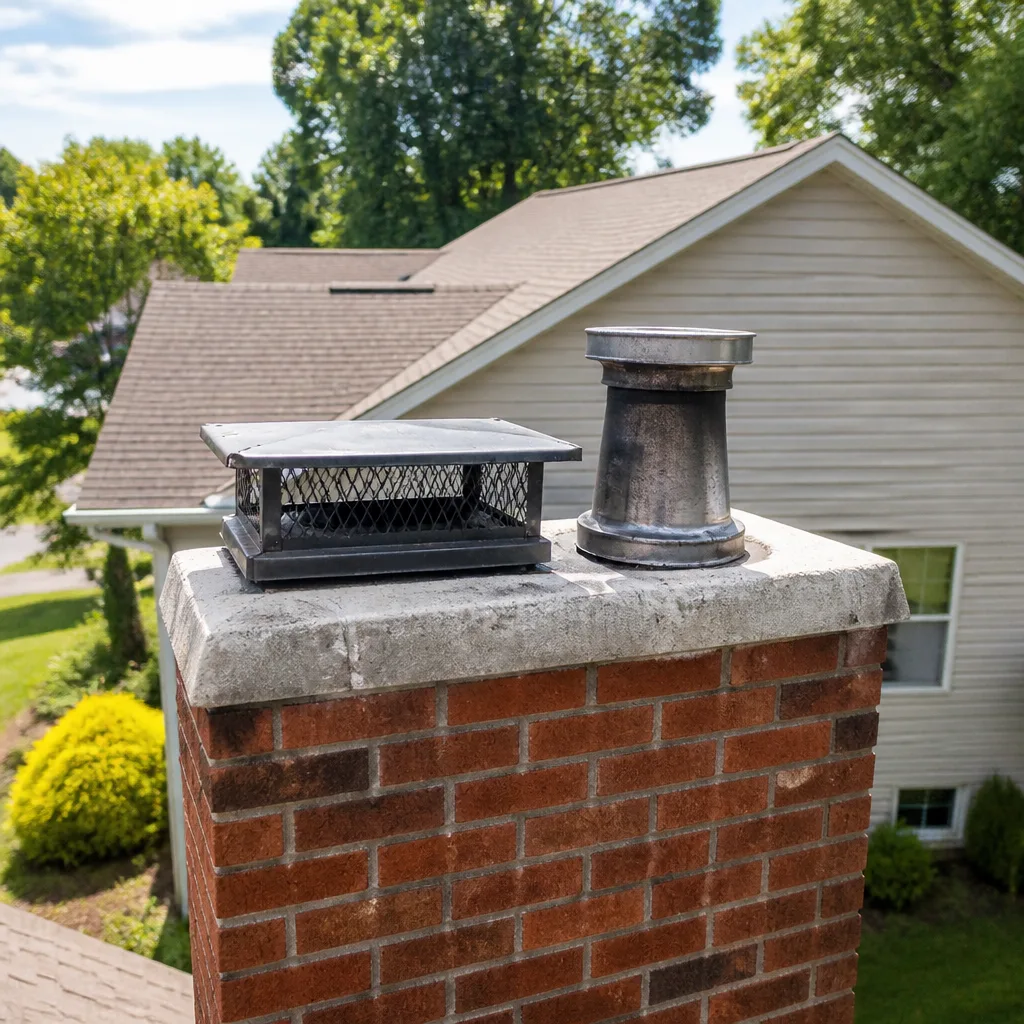 Sweep & inspection
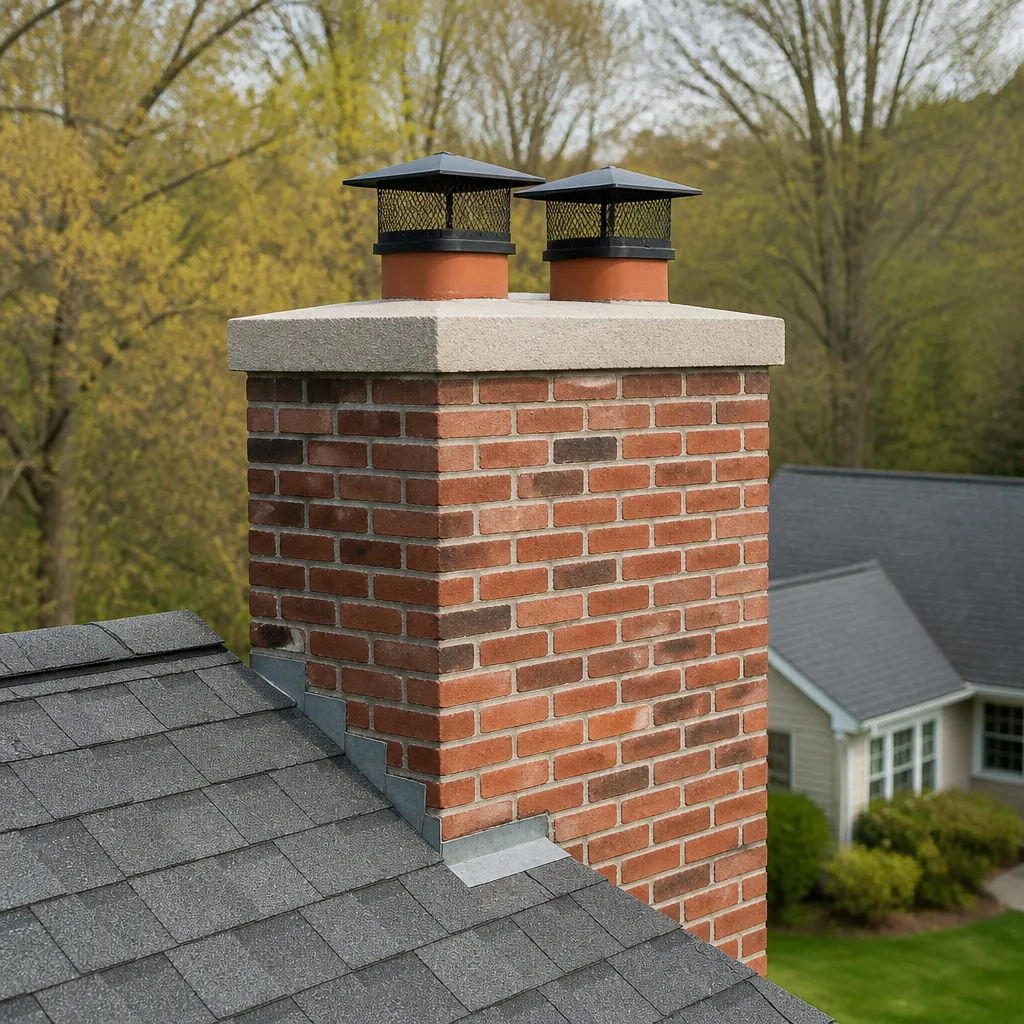 Caps & crowns
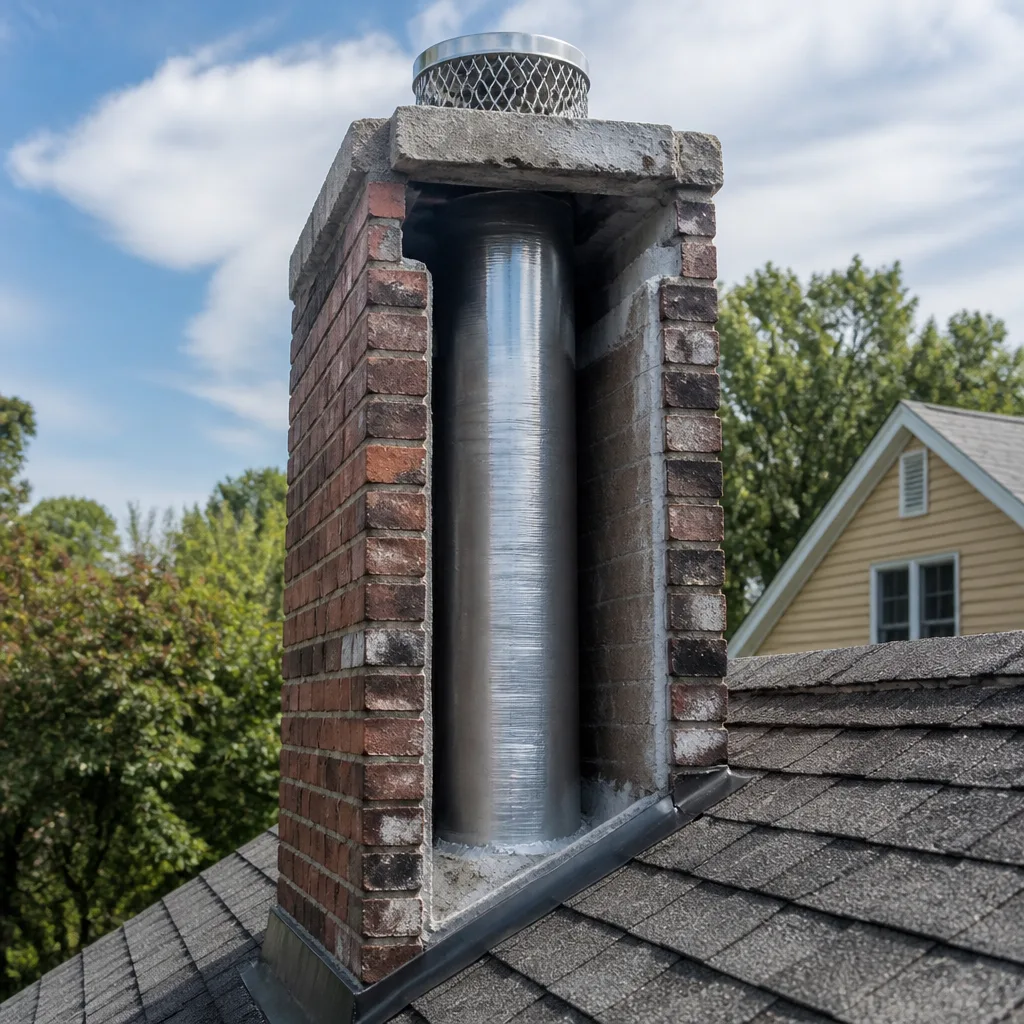 Flue relining
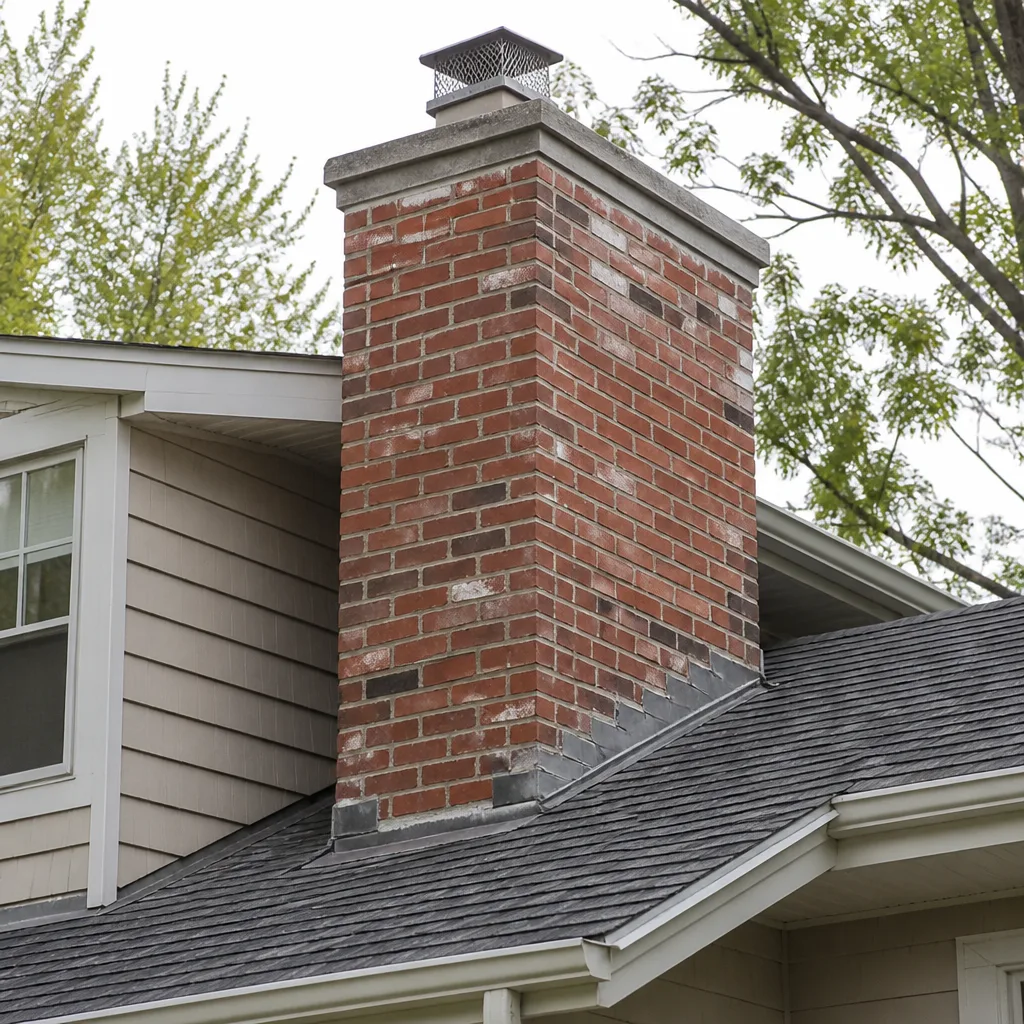 Masonry repair
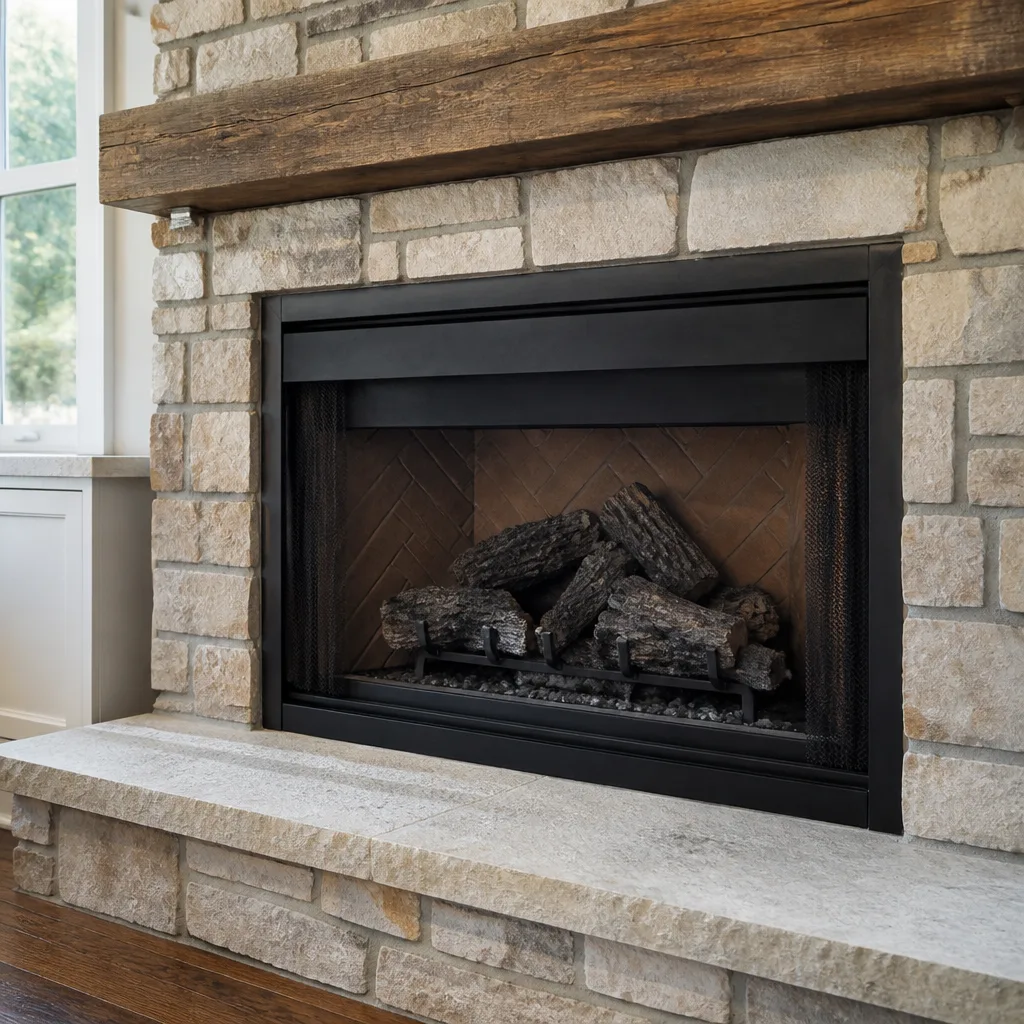 Gas fireplace service
Level 1 sweep and inspection to the NFPA 211 annual standard - flue, crown, cap, and flashing checked and photographed
Chimney sweep logs do not sweep chimneys. They loosen some creosote - which then falls where a brush and vacuum still have to collect it.
Chimney Cleaning Warning Signs: A Lexington Homeowner’s Reference Guide
A white stain on your chimney’s exterior isn’t decorative. It’s your masonry telling you water has already gotten inside. Most people read that chalky patch as “old brick” and move on, and that’s usually the moment a cheap fix turns into an expensive one. The frustrating part is that your chimney is sending you signals all the time – in the smoke, in the smell, in the color of the brick, in the pattern of debris inside the firebox. The problem isn’t a lack of warnings. It’s knowing what you’re actually seeing. This guide pairs each symptom with its likely cause and an honest severity call, so you can sort the cosmetic from the structural and the urgent from the wait-till-spring, here in Lexington.
We’re a chimney-only company, so this is the conversation we have all season long. Below you’ll find the smells, stains, smoke patterns and interior signs worth watching for, what each usually means, and when it’s time to book a sweep or an inspection rather than keep guessing.
Quick Answer
The most reliable chimney cleaning warning signs are a strong or worsening creosote odor, white efflorescence or rust staining on the exterior masonry, black streaking near the cap or crown, smoke rolling back into the room during a fire, and visible cracking or flaking inside the firebox. Any one of these is a reasonable reason to book a chimney inspection. None of them is automatically an emergency, but the exterior and interior stains together usually point to water intrusion that will not fix itself.
Styles & brands we work with
- Sweep & inspection
- Caps & crowns
- Flue relining
- Masonry repair
- Gas fireplace service
Table of Contents
- Reading the Outside of Your Chimney: Stains, Streaks and Spalling
- The Three Creosote Smells and What Each One Means
- Smoke Behavior During a Fire: Rollout, Sluggish Draft and Smoke in the Room
- Central Kentucky’s Freeze-Thaw Cycle and Your Brick
- Interior Signs Your Liner May Be Compromised
- What to Check Yourself Before You Call
- Sorting Severity: What Can Wait and What Can’t
- When to Call a Professional
Reading the Outside of Your Chimney: Stains, Streaks and Spalling
White staining, rust staining and black streaking are three different messages, and lumping them together is the most common reading error we run into. Each one tells you roughly where water is getting in and how far it’s gotten.
Efflorescence (white staining) is the chalky, powdery white residue that develops when water moves through masonry and evaporates on the surface, leaving dissolved salts behind. It means water is inside the brick or mortar, not just on it. Early efflorescence that wipes off easily is a maintenance flag. Efflorescence that keeps coming back after the masonry has dried out points to an ongoing water path – often a failing crown, a cracked mortar joint or a cap that’s no longer shedding water correctly.
Rust staining is reddish-brown and usually traces back to metal components: the damper assembly, a stainless liner whose top plate or connection has failed, or a chase cover. Rust means metal has been sitting wet. Where the stain sits tells you a lot about where the leak originates.
Black streaking on the exterior, particularly near the top of the chimney or under the cap, is often soot or creosote combined with moisture being pushed back out. It can indicate a draft problem, heavy creosote accumulation, or a cap that’s letting water in while trapping combustion byproducts. Black streaking that appears low and spreads is worth a look sooner rather than later.
In our experience across Lexington, the crown is where most of these stories start. A cracked or spalling crown lets water into the flue rather than shedding it off the top, and everything else – efflorescence, rust, interior flaking – follows. If more than one of these stains is present at once, book an inspection rather than trying to chase the source yourself. A pro can trace the water path with a camera and a moisture check in a single visit.
- White and powdery: dissolved salts pushed out by water moving through masonry; recurring efflorescence means an active leak path.
- Rust-colored: wet metal somewhere in the system; the position of the stain points toward the source.
- Black and streaky: soot or creosote with moisture; often paired with draft trouble or a failing cap.
- Green or algae-like: persistent dampness on a shaded face, usually a drainage or crown issue.
The Three Creosote Smells and What Each One Means
Not all chimney odors are the same, and the smell is often the earliest signal a homeowner notices before anything is visible. Creosote moves through recognizable stages, and the smell changes with each one. We want to be careful here: what follows is a general explanation of what those odors usually indicate, not a DIY diagnostic. The safest read comes from an inspection, and we’ll say so plainly at the end.
1. Sharp, acrid, “chemical” smell. This is typically the earliest stage – light soot and first-stage creosote that’s been baking on the flue walls but hasn’t built into a heavy deposit. It’s strongest on a warm, humid day or when the fireplace hasn’t been used in a while. On its own it’s a prompt to schedule a sweep before the heating season rather than an alarm.
2. Dense, smoky, campfire smell that lingers in the room. This often accompanies a heavier, fluffier buildup – what the trade calls second-stage creosote, the kind that forms when combustion runs cool and smoky. It can mean airflow problems and a need to sweep, and it usually correlates with sluggish draft and more frequent smoke in the room.
3. Strong, tarry, almost fuel-like smell with a hint of something burnt. This points toward the heaviest, glaze-like stage of creosote – the kind that’s hardest to remove and carries the highest fire risk. If this smell is present, a professional inspection isn’t optional in our view. Heavy glazed creosote should not be scraped or burned out by a homeowner; it needs trained hands.
Two or three sessions with a smelly chimney is reason enough to book a chimney sweep. If the smell is the tarry kind, skip the sweep-and-see approach and ask for an inspection first. In Lexington, wood-burning households that burn a lot of damp or unseasoned wood tend to move through these stages faster than they expect. A sweep in the fall, ahead of heavy use, catches it early.
Smoke Behavior During a Fire: Rollout, Sluggish Draft and Smoke in the Room
Smoke is chatty. Where it goes during a fire – and how quickly – tells you what the chimney is doing mechanically. Here’s how we match smoke behavior to its usual cause.
- Smoke rolling out of the firebox top when you first light the fire. This is “rollout,” and the most common cause is a cold flue. A cold chimney has no draft yet. Warming the flue first (a rolled newspaper held near the damper, done only with care) helps, but if rollout happens on every fire even after warming, the flue is undersized for the appliance or partially blocked.
- Sluggish draft – smoke that rises slowly and hangs. Usually tied to a flue that’s too short, blocked, or mismatched to the fireplace opening. A firebox opening that’s out of proportion to the flue size often produces this on every fire, and it’s a flue-geometry fix, not a weather issue.
- Smoke in the room with the firebox door open. Air pressure in the house matters. Modern airtight homes can create negative pressure that fights the chimney. In Lexington, tight newer construction and kitchen or bath exhaust fans running at the same time are frequent culprits.
- Smoke coming out around the cap or through masonry joints on the exterior. This points to a cracked flue or damaged liner. It’s one of the interior-of-the-system problems that most warrants prompt attention.
- A sudden smoky smell in the house with no fire burning. This is backdrafting – combustion byproducts coming back down the chimney. Turn off the appliance, ventilate, and call for an inspection rather than relighting.
Rollout and sluggish draft are the two most common complaints we hear in Lexington. Both are usually fixable, but both are worth a professional look because they can also be early signs of a partial blockage or a liner problem. A camera inspection tells the story quickly and gives you a photo record of what was found. If you’re already dealing with a smoke problem and don’t have a regular maintenance routine, this is a good moment to set one up – see our chimney repair in Lexington page for how we approach blockages and liner issues.
Central Kentucky’s Freeze-Thaw Cycle and Your Brick
Central Kentucky’s winter is the specific reason exterior brick on Lexington chimneys tends to spall the way it does. The pattern is a cycle: moisture soaks into the brick or mortar during a mild, wet stretch, then a hard freeze turns that moisture into ice. Ice expands. The face of the brick – or a layer of mortar – pops off. Then it thaws, soaks again, and the cycle repeats. Over several winters you get the flaking, crusty surface called spalling.
Distinguishing cosmetic from structural spalling is the practical question. Here’s the honest split:
- Cosmetic-first signs: light surface flaking on a few bricks on one face, no mortar missing between courses, no bricks dislodged. This is a maintenance watch, not a repair call, but it should be documented and monitored.
- Structural-first signs: delamination deeper than the surface face, visible mortar loss between courses, bricks that move slightly when pressed, a spalling pattern concentrated around the crown or the joint where the chimney meets the roof. These are the ones we treat as urgent enough to schedule an inspection.
What makes this Lexington-specific is the frequency of the cycle. Our winters move between mild and freezing repeatedly rather than locking into a single prolonged freeze, so a chimney with a water-entry path can cycle through many more freeze-thaw events in a season than the same chimney in a colder, steadier climate. The crown and the top few courses are usually the first to show it. If the spalling looks structural, don’t paint over it – painting traps moisture and accelerates the damage. The right move is to fix the water path first, then decide on a masonry repair.
Our technicians have up to 12 years of experience reading exactly these patterns on Lexington chimneys. We work with professional-grade products – including HeatShield for liner resurfacing when the flue’s inner surface is the problem, and Famco for caps and chase components when the exterior is where water is getting in – so the fix matches the failure, not a generic patch.
Interior Signs Your Liner May Be Compromised
The liner is the flue’s protective inner surface, and its failure mode is quiet. You can usually see enough inside the firebox to know whether a professional look is warranted, though you can’t properly inspect the liner by eye from the firebox alone. These are the firebox-side signs we tell homeowners to watch for:
- Vertical or horizontal cracks in the firebox or flue tile, especially cracks that widen near the top. A crack that keeps reopening after being sealed is a signal the liner needs a full inspection, not another patch.
- Discoloration on the firebox walls – rust-brown streaks or a white haze inside. Rust streaks point to moisture reaching metal components somewhere up the flue. A white haze inside the firebox is often efflorescence from water in the flue walls.
- Flaking or spalling inside the firebox itself. Firebrick flaking can indicate repeated overheating. Spalling that exposes the material behind it is worth a professional inspection.
- Debris falling into the firebox after a chimney fire, or after a strong wind event. Granular debris or chunks of flue tile in the firebox are the clearest sign that something inside the system has failed.
- A gash or gap at the top of the firebox where it meets the flue. The junction is a common failure point and one of the easiest to spot from inside.
If the liner is crack-free and undamaged, it may only need cleaning. If it’s compromised, crack sealing alone usually doesn’t restore performance – a full reline or HeatShield resurfacing is the proper fix. HeatShield is a specialized liner resurfacing system, and it’s typically installed only by trained applicators, which is one reason we rely on it rather than sealant-style shortcuts. A compromised liner on a wood-burning appliance also carries a carbon monoxide risk, so if you suspect a liner failure, stop using the appliance until it’s been inspected. That’s a safety call we don’t soften.
If the firebox itself is showing structural cracks, that’s a chimney repair conversation rather than a sweep. The inspection will tell you which.
What to Check Yourself Before You Call
You can gather useful information before a technician arrives, and it shortens the inspection. Here’s what we’d suggest checking – knowing that none of it is a substitute for a professional camera inspection.
- Look at the outside of the chimney from the ground. Note white stains, rust stains, black streaks, and any spalling. Photograph the top of the chimney from the ground if you can, safely. Rooftop work is not a homeowner task.
- Open the damper and look up the flue with a strong flashlight. Note any visible cracks, dark buildup, or daylight showing through where it shouldn’t. Don’t reach into or climb inside the firebox.
- Watch a fire for five minutes with the door open, from the front of the hearth. Note whether smoke rolls out, hangs, or rises quickly. Note whether it comes back down.
- Note the smell. Sharp, smoky, or tarry – use your own words when you call. It helps us decide whether to send a standard sweep or build an inspection into the visit.
- Note any debris in the firebox after wind or a fire. A handful of soot is normal. Chunks of tile or mortar are not.
What not to check: don’t open the top of the chimney yourself, don’t get on the roof, and don’t try to reach past the damper. The dangerous parts of a chimney – the top of the flue, the cap, and the interior of the liner – are not homeowner-checkable. That’s exactly what the professional inspection is for.
Sorting Severity: What Can Wait and What Can’t
This is the section homeowners ask for most. The honest answer is that most chimney warning signs are not emergencies, but a small handful are. Here’s how we sort them for a Lexington household.
Can typically wait (schedule within the season):
- Light surface efflorescence that wipes off and doesn’t return quickly.
- A sharp or smoky creosote smell with no smoke in the room and no visible interior damage.
- Occasional rollout on first lighting of a cold flue.
- Cosmetic surface flaking on a few bricks with no mortar loss.
- Minor soot streaks under the cap.
Book an inspection soon:
- Recurring white staining or rust staining after the chimney has dried out.
- A strong tarry smell, or any smell with visible smoke in the room.
- Sluggish draft on every fire.
- Any visible crack in the firebox that keeps reopening.
- Spalling around the crown or the joint where the chimney meets the roof.
Stop using the appliance and call:
- Smoke coming out of the exterior masonry or around the cap.
- Debris (tile chunks, mortar) falling into the firebox.
- A smoky smell in the house with no fire burning.
- Any sign of a compromised liner on a wood-burning appliance, because of the carbon monoxide risk.
If your answer to “which category is this” is unclear, that’s the honest trigger for an inspection. It’s much easier to sort a list of symptoms with a camera and a technician on site than to guess from a photo. If you’re due for routine work anyway, the sweep and the inspection often happen in the same visit, which is when you want to have the water-stain conversation too.
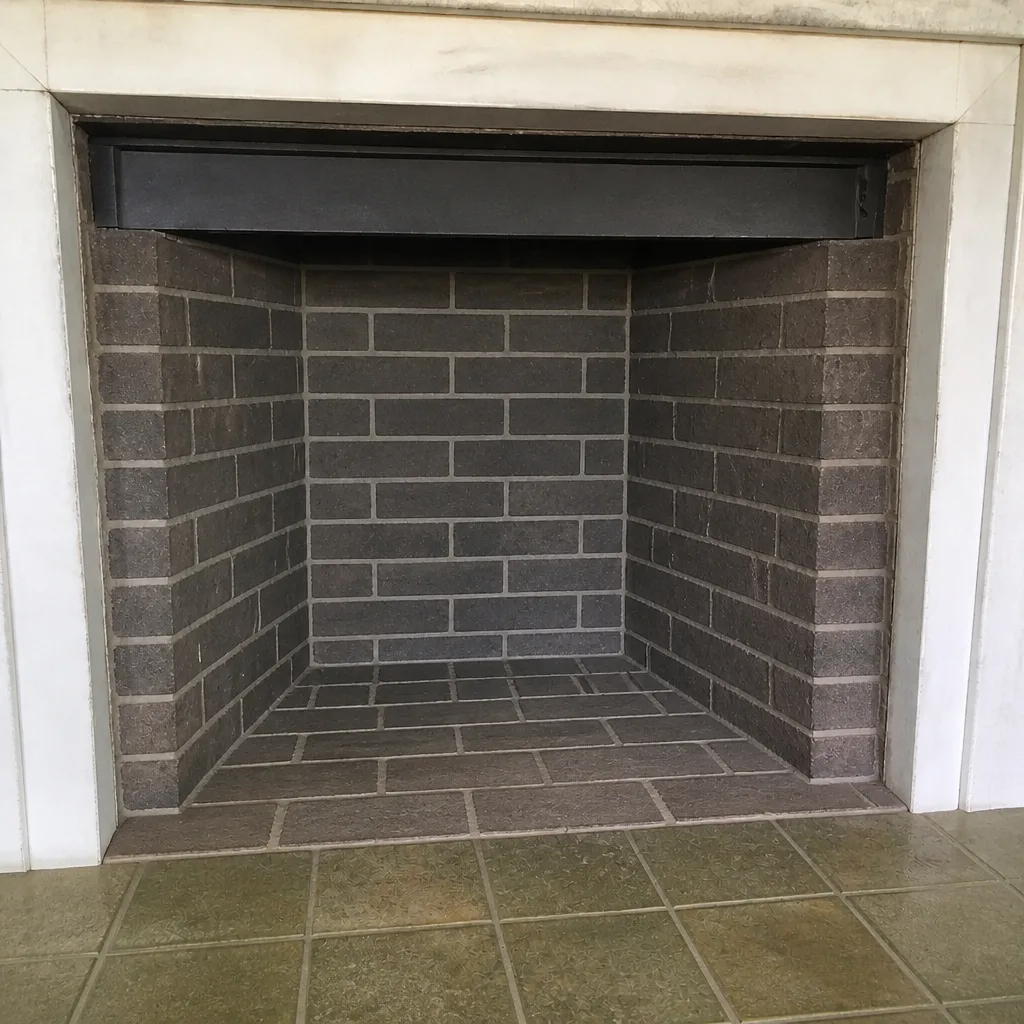
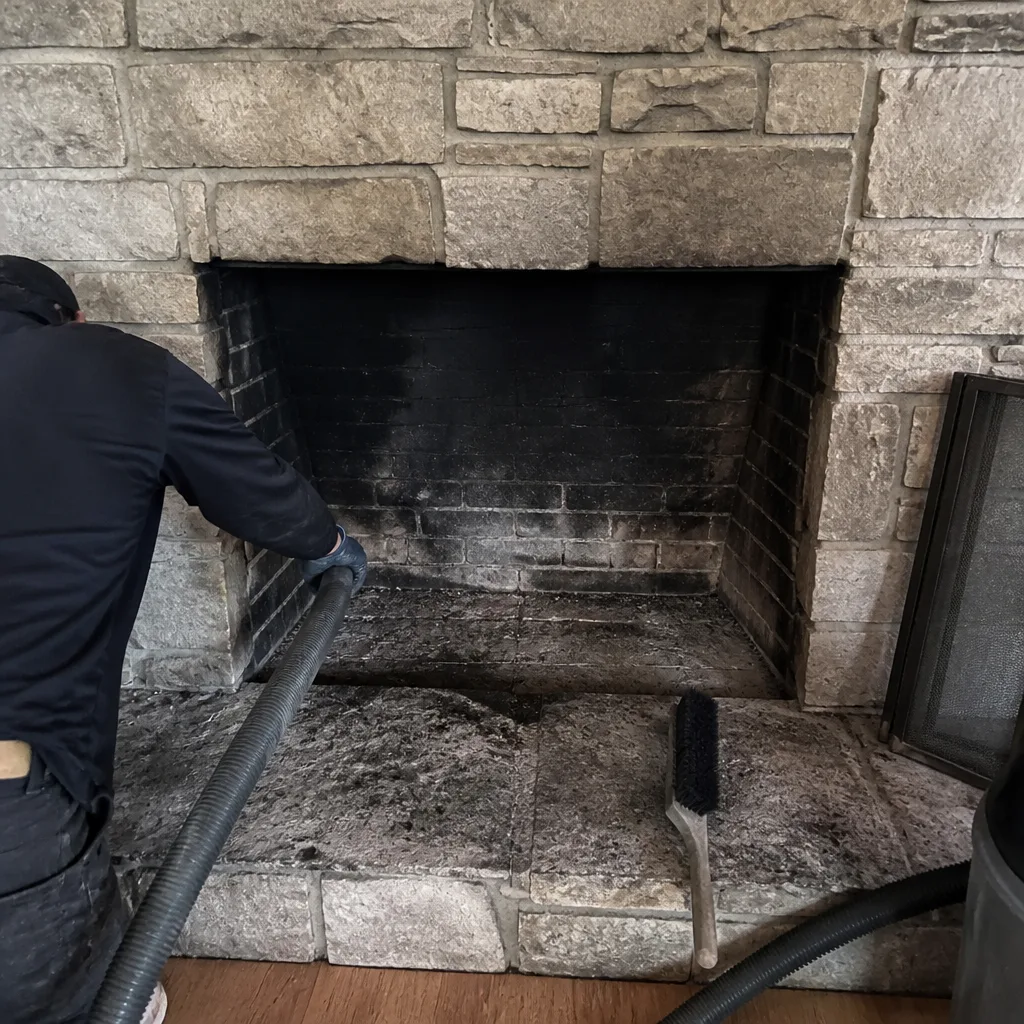
See the difference
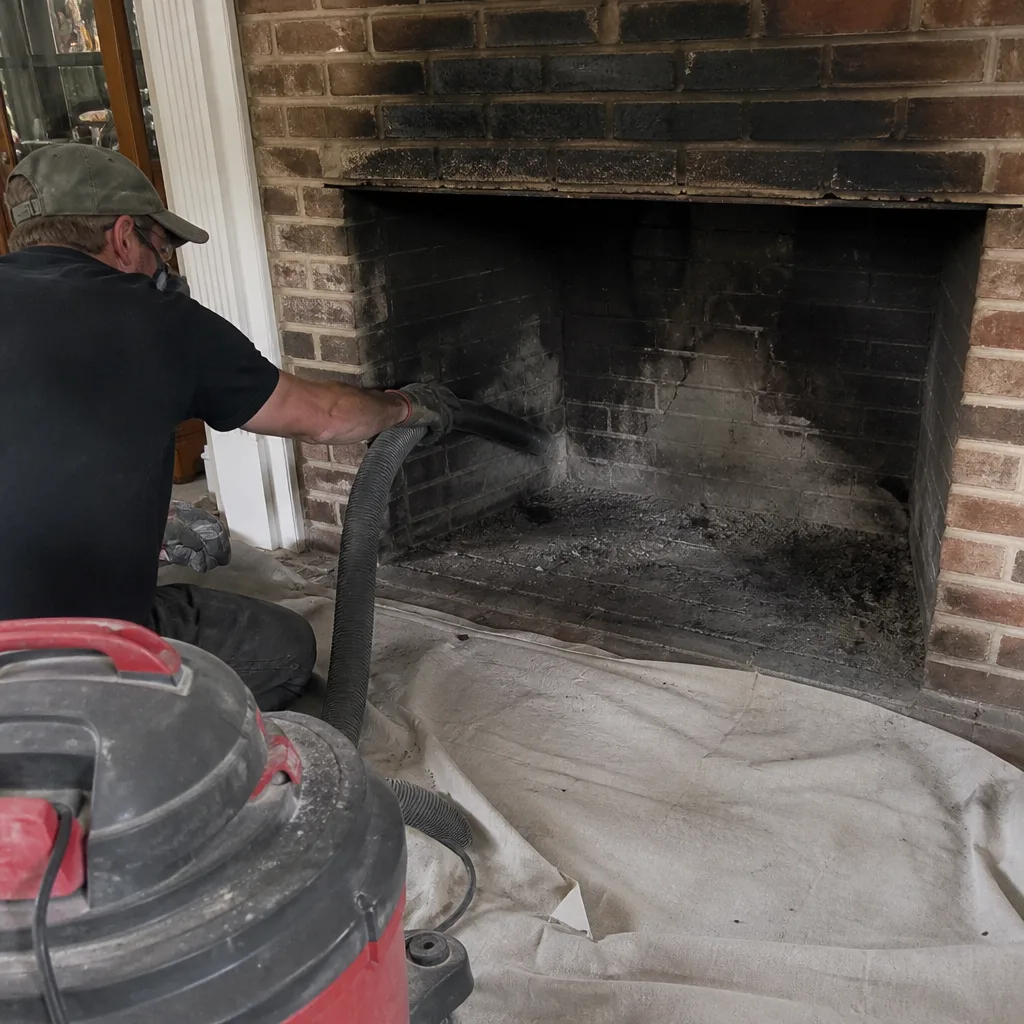 Before
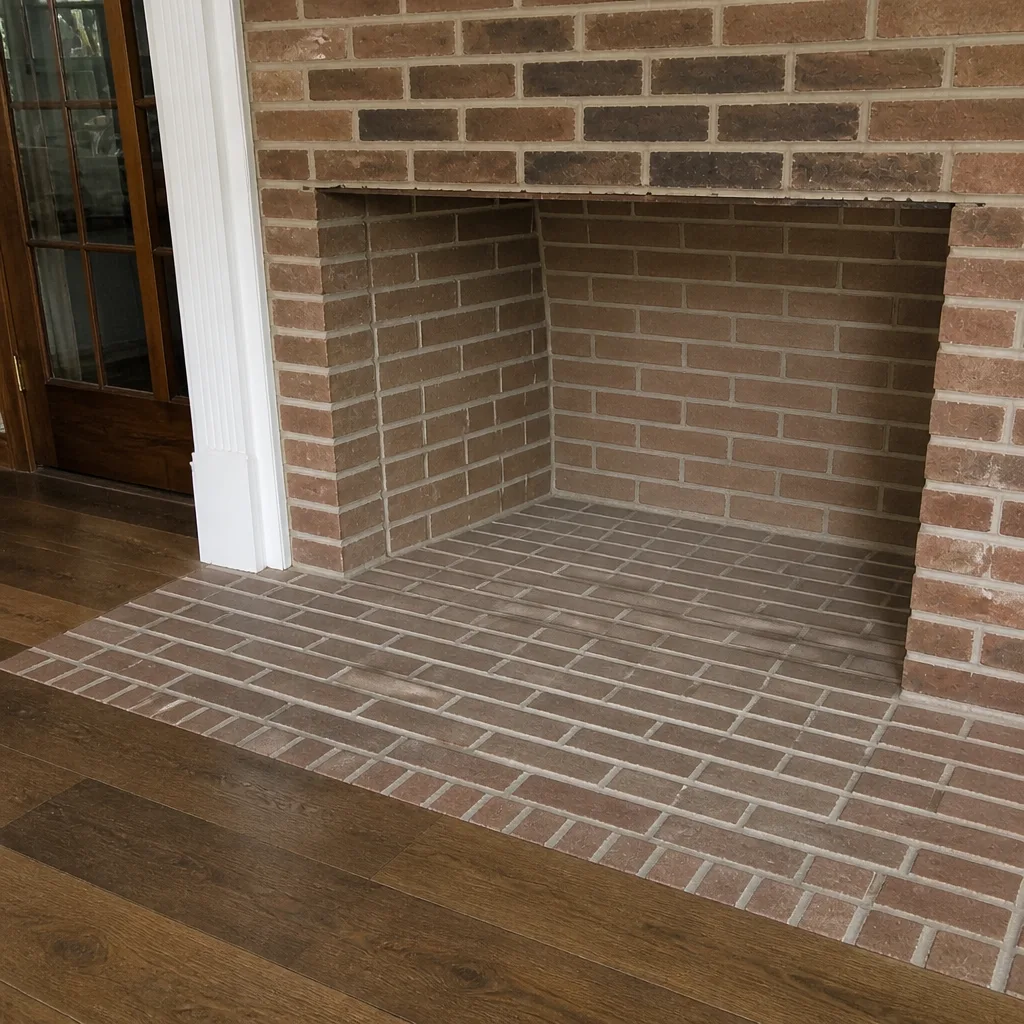 After
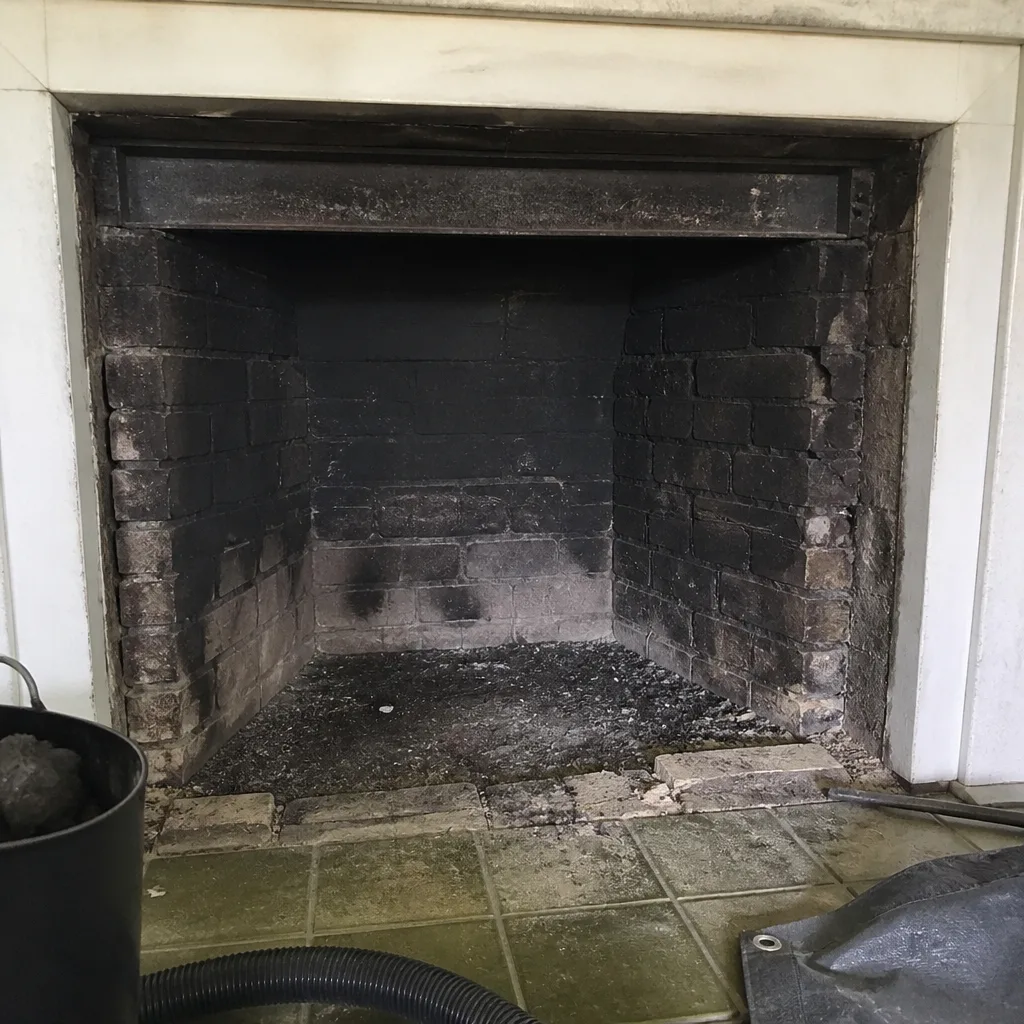 Before
 After
 Before
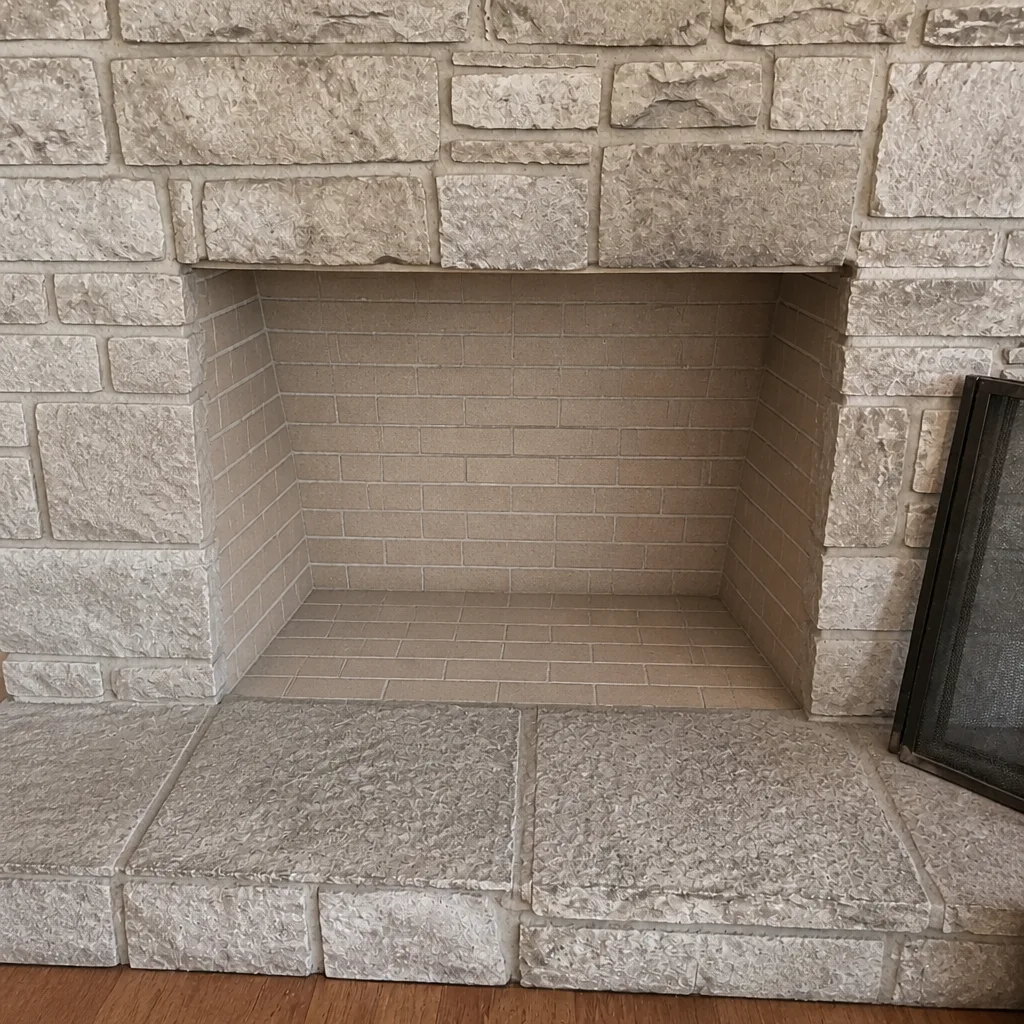 After
Common Mistakes to Avoid
- Painting over spalling brick to make it look better. Paint traps moisture inside the brick and accelerates the freeze-thaw damage in Lexington’s climate. Fix the water path first, and never paint a damp chimney.
- Assuming a smoky smell after a fire is “just how wood smells.” A sharp or tarry smell is creosote, and the tarry kind comes with a real fire risk. If in doubt, book the inspection instead of burning another load.
- Using a “chimney cleaning log” or a hardware-store brush kit on a glazed creosote liner. The heaviest creosote is glazed, and an aggressive DIY scrub can damage the flue tile. That’s a professional job, not a weekend project.
- Relighting a fire after smoke comes back into the room, without finding out why. Backdrafting can be a combustion-byproducts problem. Ventilate, then call.
- Treating an annual sweep as “done” without a camera inspection. A sweep cleans. An inspection reports. They’re related but not the same, and the inspection is what picks up a hairline liner crack.
- Ignoring rust on the firebox door or the damper assembly. Rust means metal has been sitting wet for a while, which usually points to a leak higher up the chimney.
- Assuming a gas fireplace doesn’t need looking at. Gas fireplaces have their own venting and signs; a routine inspection covers them too. Don’t skip yours because you’re not burning wood.
When to Call a Professional
Call when you see any of the “stop using the appliance” signs above. Call when two or more exterior stains appear at once. Call when the same crack keeps reopening, when the smell is the tarry kind, or when a fire produces smoke in the room on every lighting. Call before the heating season starts if you can’t remember the last time your chimney was swept, and call if you’re a new homeowner and don’t yet have a baseline inspection for your chimney. In Lexington, we’d add: book the inspection if your chimney’s exterior shows recurring efflorescence or spalling after the last freeze, because that’s the point in the cycle when the pattern is clearest.
Lexington Chimney Cleaning offers free estimates in Lexington – call (833) 946-8918. We answer 24/7. Fast dispatch from 7am to 7pm, Sunday through Friday. We don’t recommend work without camera evidence you can see for yourself, and we’ll tell you plainly when something can safely wait.
Frequently Asked Questions
No. A sharp acrid smell usually signals early soot and light creosote, a smoky lingering smell points to heavier buildup and draft trouble, and a strong tarry fuel-like smell suggests the heaviest glaze-like creosote stage with the highest fire risk. The tarry smell is the one that warrants an inspection rather than a standard sweep-and-see. Call (833) 946-8918 for an exact quote – estimates are free.
White staining (efflorescence) means water has been moving through the masonry, which is a maintenance flag rather than an automatic emergency. If it wipes off and doesn’t return after the brick has dried, watch and monitor. If it keeps coming back, it points to an active leak path, often around the crown, and it’s worth an inspection. Call (833) 946-8918 to book one.
You can spot a few of the obvious interior signs – cracks in the firebox, rust streaks, debris in the firebox – from inside the firebox with a flashlight. You can’t properly check the liner itself without a camera, and you should never get on the roof or reach past the damper to try. A professional inspection is the way to know. Call (833) 946-8918 for an exact quote – estimates are free.
Stop using the fireplace, open a window to ventilate, and call for an inspection rather than relighting. Consistent rollout on every lighting usually points to a cold or undersized flue, a partially blocked flue, or an out-of-proportion firebox opening – all of which need a professional look with a camera. Call (833) 946-8918 for an exact quote.
Yes, relative to a climate that freezes once and stays frozen. Repeated mild-freeze cycles let water soak in, freeze, expand and pop the brick face, then thaw and repeat across the same winter. That pattern on a Lexington chimney is why we treat recurring efflorescence and spalling around the crown as a prompt for inspection. Call (833) 946-8918 for an exact quote – estimates are free.
A sweep cleans the flue; a camera inspection is what reports on the liner. That’s why we include a camera inspection and photo report with the visit, so you see what we see. If you’ve never had an inspection, a sweep visit is a good time to start. Call (833) 946-8918 for an exact quote – estimates are free.
The Bottom Line
Your chimney is a system that tells you about itself all season long, through smell, smoke and stain. The three distinct creosote smells trace the buildup stages. The three exterior stains trace the water path. Spalling around a Lexington chimney traces the freeze-thaw cycle. And the interior signs in the firebox trace the liner. Most of these signals are maintenance prompts, not emergencies. A small handful – smoke out of the exterior masonry, debris falling into the firebox, a liner sign on a wood-burning appliance – are stop-and-call. Knowing which is which is what this guide is for. We’re a chimney-only company, so the sweep, the inspection and the repair all happen with the same team, and we carry the professional-grade brands – DuraFlex, HeatShield, Copperfield and Olympia Chimney – that a proper repair calls for. From inspection to repair in one call. If you’re not sure which sign you’re seeing, the safest next step is an inspection.
Call (833) 946-8918. We answer 24/7. Fast dispatch from 7am to 7pm, Sunday through Friday.
Written by the team at Lexington Chimney Cleaning.